 English
How do temperature and pressure affect lamination quality?
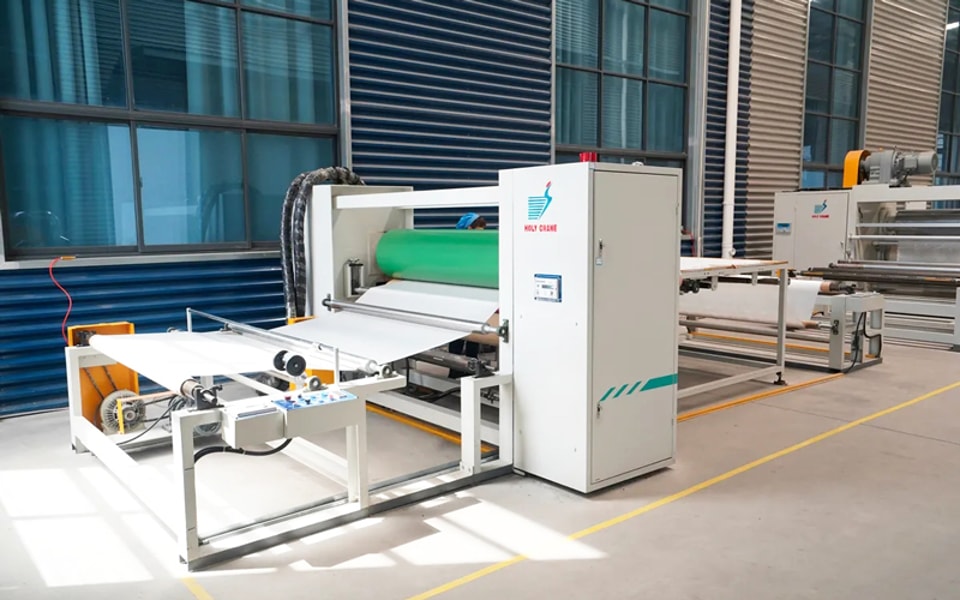
Temperature and pressure are the two most critical process parameters in hot-press lamination; they directly determine the bond strength, surface quality, dimensional stability, and overall performance of the final product. Whether dealing with textiles, plastic films, foams, leather, or functional composite materials, a proper balance between temperature and pressure is essential to achieve high-quality lamination results. Improper control of either parameter can lead to quality issues such as delamination, blistering, wrinkling, deformation, or weak adhesion. Therefore, during the hot-press lamination process, temperature, pressure, and dwell time must be carefully set based on material characteristics to achieve an optimal balance among the three.
First, temperature determines the degree of material softening and bonding capability. During hot-press lamination, heating causes hot-melt adhesives, adhesive films, or thermoplastic materials to soften or even melt, imparting good flowability and ensuring thorough wetting of the material surfaces. When the temperature falls within the appropriate range, the adhesive layer spreads evenly and fills microscopic surface pores, creating a strong bonding interface that enhances peel strength and bond stability.
If the temperature is too low, materials fail to soften sufficiently, and the adhesive layer lacks the flowability to fully cover the bonding interface; this often results in issues such as localized weak adhesion, edge separation, and insufficient bond strength. Furthermore, inadequate fusion between materials makes the product prone to delamination during subsequent use, compromising overall durability.
Conversely, excessively high temperatures also compromise lamination quality. Excessive heat can cause the adhesive layer to over-melt or even decompose, thereby reducing bonding performance. Materials such as plastic films, foams, and fabrics may suffer from shrinkage, deformation, burn-through, discoloration, or a loss of surface gloss. Certain functional films may even lose their original waterproof, breathable, or barrier properties at high temperatures, impairing the product's functional effectiveness. Thus, precise control of heating temperature is a crucial prerequisite for ensuring lamination quality.
In addition to temperature, pressure plays a vital role. Pressure ensures that different materials fit together closely and promotes the uniform distribution of the adhesive layer. When appropriate pressure is applied, air trapped between the materials is effectively expelled, and the adhesive layer evenly fills the entire bonding interface, resulting in a denser composite structure and enhancing the product's overall strength and stability. Insufficient pressure prevents full contact between materials, making it likely that air or voids remain trapped; this can lead to defects such as bubbles, blisters, or localized delamination. This is particularly critical when processing large-format sheets or multi-layer composites, where inadequate pressure can result in inconsistent bonding across different areas, thereby compromising product uniformity.
However, higher pressure is not always better. Excessive pressure can squeeze out too much adhesive, resulting in an insufficient bond layer and reduced bond strength. For flexible materials like foam or non-woven fabrics, it may cause a reduction in thickness or the collapse of internal structures, impairing cushioning and resilience. Certain textile materials may even sustain permanent indentation under excessive pressure, affecting the product's visual quality. Therefore, the pressure range should be selected based on the material's thickness, hardness, and structural characteristics.
Temperature and pressure are closely synergistic; they must be properly balanced to achieve optimal processing results. At higher processing temperatures, materials soften more rapidly, often allowing for a reduction in required pressure. Conversely, at lower temperatures, higher pressure may be necessary to ensure adequate bonding; however, if the temperature is too low, increasing the pressure alone cannot compensate for the lack of material softening. Similarly, if pressure is high but the temperature is insufficient, effective bonding still cannot be achieved; thus, one cannot rely on a single parameter to improve product quality.
Different materials have distinct requirements regarding temperature and pressure. For instance, thermoplastics typically require higher processing temperatures, whereas natural fiber fabrics are more susceptible to heat damage and require careful control of heating rates and peak temperatures. Foam materials are sensitive to pressure—excessive force can cause permanent compression—while rigid materials like thin metal sheets usually require higher pressure to ensure uniform bonding. Consequently, process parameters should be tailored to specific material properties during production rather than applying uniform processing conditions.
Furthermore, the uniformity of temperature and pressure is crucial. Uneven temperature distribution across the hot-pressing equipment leads to inconsistent bonding across the product, potentially causing issues such as localized weak adhesion or overheating. Similarly, uneven pressure distribution results in non-uniform stress on the materials, leading to defects such as inconsistent thickness, edge curling, or central bulging. Therefore, maintaining the stable operation of the heating system and the pressing mechanism is crucial for enhancing product consistency.
Modern hot-press lamination equipment is typically equipped with high-precision temperature control systems, pressure regulation systems, and automatic monitoring devices. These systems enable real-time monitoring of processing parameters and automatically adjust process conditions based on the specific materials used. This not only boosts production efficiency but also effectively minimizes human error, resulting in more consistent product quality and meeting the demands of continuous, high-volume production.
In summary, temperature determines whether materials soften sufficiently to achieve effective bonding, while pressure determines whether they fit together tightly to form a uniform, stable composite structure. These two factors interact and complement each other, collectively determining the bond strength, aesthetic quality, dimensional stability, and service life of the hot-pressed composite product. Only by scientifically setting the temperature, pressure, and processing time—based on material characteristics—and ensuring stable equipment operation can one obtain high-quality, highly consistent composite products and fully leverage the technical advantages of the hot-press lamination process.


