 English
What factors influence the quality of orthogonal composites?
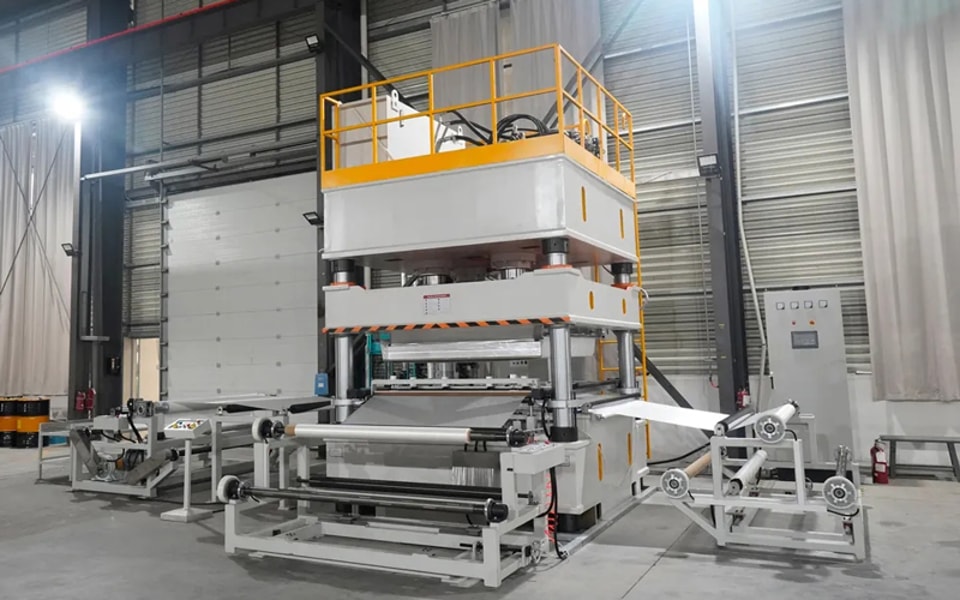
The quality of orthogonal composite materials is influenced by a multitude of factors—ranging from raw material properties and equipment precision to process parameter control and the production environment. Each stage plays a critical role in determining the final product's mechanical properties, dimensional stability, and service life. Only through the scientific control of these factors can orthogonal composite materials with uniform structures, stable performance, and consistent quality be produced.
First, the quality of raw materials is fundamental to the performance of orthogonal composite materials. The strength, modulus, uniformity, and surface quality of high-performance fibers, fabrics, non-wovens, or other reinforcements directly impact the composite's effectiveness. Issues such as uneven fiber thickness, broken filaments, impurities, or excessive moisture content can lead to uneven stress distribution during the composite process, thereby reducing the material's overall strength. Furthermore, the compatibility between the matrix and the reinforcement is crucial; their respective thermal, mechanical, and surface properties must align well to ensure a stable bond between layers.
Second, the precision of fiber alignment is a key determinant of composite quality. The advantage of orthogonal composite materials lies in their ability to form a structure that distributes loads evenly in both longitudinal and transverse directions. Any misalignment, waviness, overlapping, or inconsistent spacing of fibers disrupts this balance, creating areas of stress concentration. When subjected to tensile, bending, or impact loads, these areas are prone to cracking or delamination, compromising the product's overall performance. Consequently, production processes must ensure accurate fiber placement, neat alignment, and consistent tension control.
Third, temperature control significantly affects composite quality. During hot-press consolidation, the appropriate temperature allows adhesive layers or thermoplastic materials to soften sufficiently, enhancing the bonding capability between materials. Insufficient temperatures prevent adequate flow of the adhesive, leading to weak bonds and poor interlaminar adhesion; conversely, excessive temperatures can cause material degradation, deformation, or performance loss. Processing temperatures must be carefully selected based on the heat resistance of the specific fibers and matrix materials, and temperature uniformity across the heating zone must be maintained to ensure consistent product quality.
Pressure control is another critical factor influencing composite quality. Applying the correct pressure ensures tight contact between material layers and expels trapped air, thereby increasing the density and consolidation of the composite. Insufficient pressure can lead to residual gaps between materials, resulting in defects such as air bubbles, delamination, or inadequate bond strength; conversely, excessive pressure may damage the fiber structure, cause uneven material thickness, or even compromise the fibers' inherent mechanical properties. Therefore, pressure levels and holding times must be appropriately adjusted based on material thickness, structural characteristics, and adhesive layer properties.
The performance of the adhesive or resin system also directly impacts the quality of the composite material. The adhesive layer not only plays a crucial role in bonding the material layers but also determines the durability and stability of the composite structure. Issues such as localized delamination or voids can arise if the adhesive lacks sufficient flowability, fails to cure completely, or is distributed unevenly. Appropriate adhesive types must be selected for different materials, and parameters such as application amount, curing temperature, and curing time must be strictly controlled to ensure the formation of a uniform, continuous bonding interface.
Equipment operational precision is another critical factor that cannot be overlooked. Modern cross-ply composite machines are typically equipped with systems for automatic feeding, tension control, ply laying, and synchronous pressing. Fluctuations in tension, unstable conveying speeds, guide roller misalignment, or positioning errors during operation can lead to deviations in fiber alignment, thereby affecting dimensional accuracy and structural uniformity. Consequently, moving parts should be inspected regularly to ensure the transmission system, guiding mechanisms, and control systems remain in optimal condition.
Production speed also influences composite quality. Excessive speed limits the time materials are exposed to heat and pressure, preventing the adhesive layer from flowing and curing adequately, which can reduce bond strength; conversely, excessively slow speeds may expose materials to prolonged heating, leading to shrinkage, aging, or performance degradation. Therefore, feeding speed, heating time, and cooling time should be balanced according to the processing characteristics of specific materials to maintain stability throughout the production process.
The production environment also affects the quality of cross-ply composite materials. For instance, airborne dust, fiber fragments, or other impurities entering the interlaminar spaces can impair bonding and create localized defects. Furthermore, fluctuations in ambient temperature and humidity can alter material moisture content and adhesive performance; strict control over environmental cleanliness and stability is particularly essential when working with high-performance fibers and functional film materials to minimize quality variations caused by external factors.
In addition, the consistency of process parameters is crucial for mass production. During continuous production, parameters such as temperature, pressure, tension, speed, and ply orientation must be kept stable to avoid product performance variations caused by frequent adjustments. Modern automated control systems enable real-time monitoring of process data and automatic correction of anomalous parameters, thereby ensuring high consistency and reliability across product batches.
Finally, quality inspection and process control are crucial for ensuring the quality of orthogonal composite materials. Throughout production, material thickness, interlaminar bond strength, dimensional accuracy, and surface quality should be regularly monitored, with process parameters adjusted promptly based on the results. For high-performance composites, additional testing—covering tensile, flexural, impact, and durability properties—may be conducted to ensure the product meets the requirements of its intended application.
In summary, the quality of orthogonal composite materials is influenced by a multitude of factors, including raw material properties, fiber alignment precision, temperature and pressure control, resin layer characteristics, equipment precision, production speed, the manufacturing environment, and process stability. Only through comprehensive management and precise control of every production stage can orthogonal composite materials with uniform structure, superior performance, and consistent quality be produced, providing a reliable material foundation for various high-end manufacturing sectors.


