 English
What are the advantages of a hot pressing laminating machine?
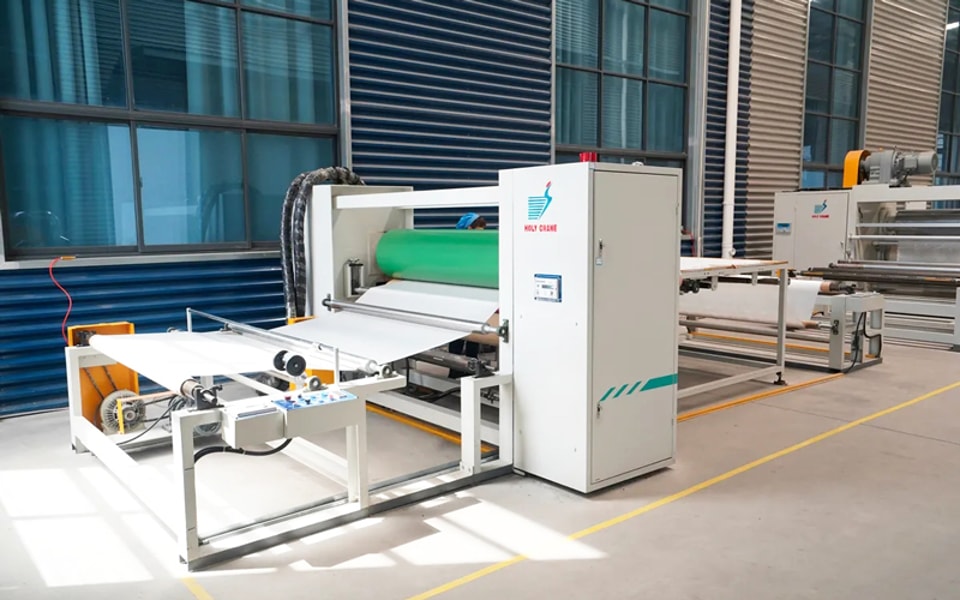
The hot-press laminating machine is specialized equipment designed to bond and form materials of different compositions through the application of heat and pressure. It is widely used across sectors such as textiles, plastics, packaging, automotive interiors, architectural decoration, and advanced composite materials. Its core advantages lie in high molding quality, broad applicability, high production efficiency, and excellent process controllability.
First, the machine's primary advantage is its ability to achieve high bonding strength and a secure, durable bond. Under the combined action of heat and pressure, the molecular structures on the surfaces of the materials undergo a degree of activation, facilitating the penetration and fusion of adhesives or the materials themselves, thereby creating a tighter bonding interface. Compared to traditional cold-pressing or simple adhesive methods, hot-press lamination significantly improves peel strength while enhancing the material's overall wear resistance, tensile strength, and durability, resulting in a more stable and reliable composite product.
Second, the equipment offers precise control over temperature and pressure—a critical factor in ensuring consistent product quality. Modern hot-press laminating machines are typically equipped with accurate temperature control systems and pressure regulation devices, allowing processing parameters to be flexibly adjusted based on the specific characteristics of the materials. Since excessively low temperatures result in weak bonding and excessively high temperatures can cause material deformation or performance degradation, precise control ensures the lamination process occurs within the optimal operational window; this effectively reduces the rate of defective products and increases the overall yield of qualified goods.
Third, the machine is compatible with a remarkably wide range of materials, which is a key advantage. High-quality lamination can be achieved through the hot-press process for various combinations, such as fabrics with films, plastics with metals, or foam with leather. In the automotive interior sector, it is used to bond seat fabrics to foam layers; in the packaging industry, it facilitates the lamination of multi-layer barrier materials; and in architectural decoration, it is employed for the pressing and bonding of decorative panels. This high level of adaptability makes it valuable across numerous industries.
Fourth, high production efficiency and ease of automation represent another major advantage. These machines typically operate on a continuous or semi-continuous basis, executing a complete workflow—including automatic feeding, heating and pressing, pressure-holding and cooling, and discharging—with minimal manual intervention. Compared to traditional manual lamination methods, this approach not only offers faster speeds but also enables stable, batch-style production, making it particularly well-suited for large-scale industrial manufacturing requirements. At the same time, the automated control system enables parameter presetting and cyclic operation, thereby enhancing the consistency of production cycle times.
Fifth, superior product surface quality is another significant advantage. During the hot-press lamination process, the combined effects of high temperature and high pressure effectively expel air and excess moisture, preventing defects such as bubbles, wrinkling, and delamination. This results in a finished product surface that is flatter, more uniform, and aesthetically pleasing—qualities that are particularly crucial for products with strict appearance requirements, such as automotive interior panels, decorative materials, and high-end packaging.
Sixth, energy efficiency and high material utilization rates are key characteristics of hot-press laminating machines. Precise process control minimizes adhesive waste and material loss, while an efficient heat-transfer structure reduces energy consumption. Unlike traditional multi-step lamination methods, hot-press lamination bonds multiple material layers in a single process, reducing intermediate steps and improving overall resource utilization efficiency.
Finally, the equipment’s stability and process repeatability ensure high reliability in industrial production. Standardized process parameters guarantee consistent quality across different batches and minimize fluctuations caused by manual operation, facilitating large-scale, standardized production management for enterprises.
In summary, with its multiple advantages—including high-strength bonding, precise temperature and pressure control, broad material compatibility, high production efficiency, excellent surface quality, and energy-efficient performance—the hot-press laminating machine has become an indispensable piece of equipment in modern composite material processing, playing a pivotal role across various industrial sectors.


