 English
What are the key features of a barrel-type microcontroller?
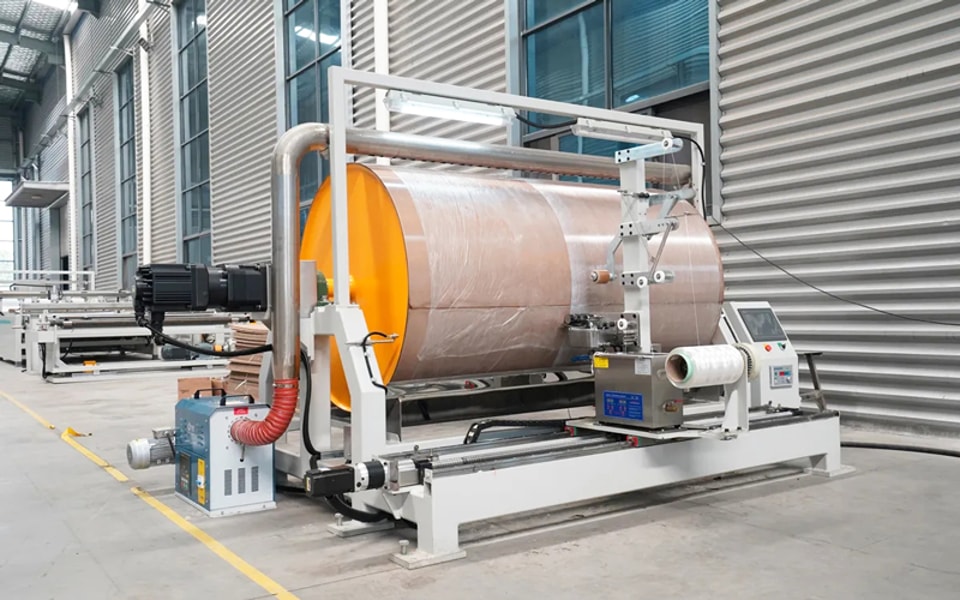
As a core control unit in industrial automation systems, the barrel-style microcontroller is designed to achieve centralized control, intelligent regulation, and safety management for complex production equipment. Typically employed in machinery involving continuous multi-stage operations or the coordinated control of multiple parameters, it is characterized by high levels of integration, intelligence, and stability. Its key attributes span control capabilities, data processing power, stability, scalability, and safety.
First, high integration is one of the most notable features of the barrel-style microcontroller. It consolidates various control functions—such as logic control, timing, sequencing, and analog signal processing—into a single unit. Unlike traditional distributed control systems that require multiple relays or independent modules to perform different tasks, the barrel-style microcontroller handles multiple functions via a single core; this simplifies the system architecture, enhances overall equipment reliability, and reduces wiring complexity.
Second, robust real-time data processing capability is a core feature. The microcontroller rapidly acquires signals from diverse sensors—monitoring temperature, pressure, speed, and position—and performs calculations and feedback control within an extremely short timeframe. This high-speed response enables it to adapt to the dynamic changes of complex industrial environments, ensuring that operational parameters remain within set limits and thereby guaranteeing consistent product quality.
Third, excellent programmability is a significant characteristic. Operators can flexibly program control logic or configure parameters to meet specific production process requirements. For instance, different operating modes, timing sequences, and process curves can be set to accommodate the production needs of various products. This flexibility imparts strong versatility to the equipment, allowing for rapid switching between different production tasks.
Fourth, high stability and strong interference immunity are crucial for reliable operation in industrial settings. Industrial sites often present challenging environmental factors such as electromagnetic interference, temperature fluctuations, dust, and vibration. Barrel-style microcontrollers typically feature industrial-grade hardware designs that offer robust resistance to interference and environmental stressors. They maintain stable control performance even during prolonged, continuous operation, thereby reducing system failure rates.
Fifth, excellent scalability is another key feature. These microcontrollers typically support a variety of expansion modules, allowing for the addition of input/output interfaces, communication modules, or supplementary functional control units. This modular design allows the equipment to be flexibly scaled according to production volume or process complexity, meeting the needs of various application scenarios without requiring a complete replacement of the control system.
Sixth, precise process control capability is a key advantage. The barrel-type microcontroller enables accurate control over multiple operational parameters—such as temperature profile regulation, staged pressure adjustment, and speed synchronization. Through fine-tuned adjustments, it ensures the production process runs stably according to preset specifications, thereby enhancing product consistency and the pass rate.
Seventh, the ability to handle multiple tasks collaboratively is another notable feature. Complex production systems often require the simultaneous control of various units, such as heating, hydraulic, drive, and inspection systems. The barrel-type microcontroller can manage multiple control tasks concurrently while ensuring coordinated operation across systems—preventing conflicts or delays—to boost overall production efficiency.
Eighth, comprehensive safety protection mechanisms are an indispensable feature. These microcontrollers typically incorporate various safety functions, including over-temperature, over-pressure, and overload protection, as well as emergency stop capabilities and automatic fault alarms. Upon detecting anomalies, the system can immediately initiate protective measures to prevent equipment damage or production accidents, thereby safeguarding both the equipment and the operators.
Ninth, data logging and monitoring capabilities are also significant features. The barrel-type microcontroller records critical operational data in real-time, such as run times, fluctuations in process parameters, and fault logs. This data serves not only for production traceability but also for process optimization and equipment maintenance analysis, ultimately elevating the level of overall management.
Furthermore, barrel-type microcontrollers generally offer excellent human-machine interface (HMI) capabilities. Through the operating interface, users can intuitively configure parameters, monitor operational status, and perform fault diagnostics. This visual approach simplifies usage, improves operational efficiency, and makes equipment management more convenient.
Finally, with technological advancements, modern barrel-type microcontrollers are increasingly incorporating intelligent and networked features. Capabilities such as remote monitoring, data uploading, cloud-based management, and remote debugging enable centralized management and intelligent control, thereby enhancing the level of digitalization and information integration within the production system. Overall, the key characteristics of barrel-type microcontrollers include high integration, real-time data processing capabilities, programmability, high stability, excellent scalability, precise control, multi-tasking coordination, safety protection mechanisms, data logging functions, and the potential for intelligent evolution. Collectively, these features underpin their core value in modern industrial automation systems, establishing them as vital control units in the fields of complex equipment control and intelligent manufacturing.


