 English
What materials can an automatic cutting machine process?
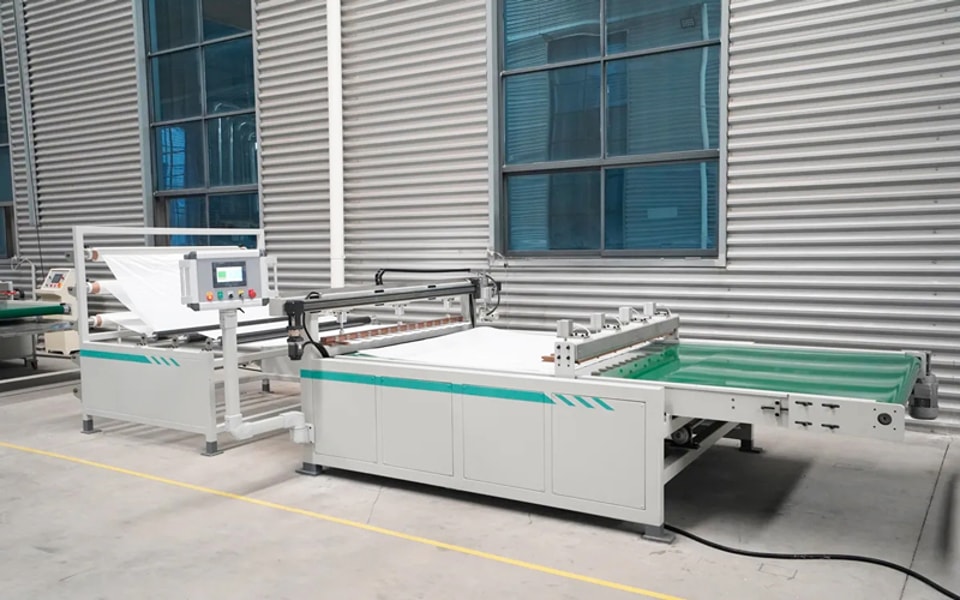
An automatic cutting machine is a device that utilizes a CNC system, servo drives, and high-precision cutting tools to automate material cutting; it is widely used across various industrial sectors due to its high cutting precision, consistent efficiency, and strong adaptability. It handles a vast range of materials—including soft, semi-rigid, and certain composite materials—such as textiles, leather, rubber and plastics, foam, paper, and industrial composites.
First, textiles are among the most common materials processed by automatic cutting machines. A wide variety of natural and synthetic fiber fabrics—including cotton, polyester, nylon, knits, wovens, non-wovens, and industrial filter fabrics—can be cut with high precision. These materials are typically soft and prone to deformation; while traditional manual cutting often leads to dimensional errors, automatic cutting machines use CNC nesting and precise tool control to deliver consistent results, significantly boosting production efficiency and product quality. They are widely used in sectors such as apparel, home textiles, medical protective gear, and industrial filtration.
Second, leather and synthetic leather are also key materials for automatic cutting machines. Natural leather, PU leather, PVC leather, and microfiber leather are extensively used in the footwear, luggage, automotive interior, and furniture industries. These materials generally demand high standards for edge neatness and dimensional accuracy; automatic cutting machines enable precise nesting and cutting based on design patterns, effectively minimizing material waste and maximizing utilization rates. Furthermore, they facilitate the rapid shaping of complex patterns via CNC programming, enhancing processing flexibility.
Third, rubber and elastic materials are also well-suited for automatic cutting. Examples include natural rubber sheets, silicone rubber, nitrile rubber, neoprene, and various rubber sealing materials. These materials possess high elasticity and inherent tackiness; traditional cutting methods often result in stretching, deformation, or uneven edges. In contrast, automatic cutting machines utilize stable cutting pressure and high-speed control to produce clean, precise cuts, thereby improving the quality of products such as seals, shock-absorbing pads, and industrial gaskets.
Fourth, foam and expanded materials represent another major application area for automatic cutting machines. Materials such as polyurethane foam, EVA foam, PE foam, rubber foam, and composite foam are widely used in industries including packaging, cushioning, sound insulation, thermal insulation, and automotive interiors. Characterized by low density and soft structures, these materials are prone to compression deformation during processing. By precisely controlling cutting depth and paths, automatic cutting machines achieve high-quality, burr-free cuts while ensuring dimensional consistency, making them ideal for mass production.
Paper and packaging materials—such as corrugated board, cardstock, kraft paper, composite packaging paper, and label materials—can also be processed using automatic cutting machines. These materials are commonly used for packaging boxes, cartons, display stands, and printed products, all of which demand neat cutting edges and consistent dimensions. Automatic cutting machines rapidly execute complex shape cutting and nesting, effectively boosting productivity in the packaging industry.
In the industrial manufacturing sector, automatic cutting machines are also used to process composite materials, such as fiber-reinforced composites, laminates, thermal insulation materials, and multi-layer structures. Due to their complex structures and varying hardness, these materials are difficult to process consistently using traditional methods; however, automatic cutting machines utilize CNC path planning and high-rigidity tools to enable simultaneous multi-layer cutting, thereby enhancing processing precision and stability.
Additionally, automatic cutting machines handle soft film materials, including plastic films, functional films, protective films, and aluminum-plastic composites. Widely used in electronics protection, food packaging, and industrial safety, these applications require high cutting precision and smooth edges. Automatic cutting machines effectively prevent stretching deformation and edge burrs, ensuring superior product appearance.
As technology advances, the range of materials compatible with automatic cutting machines continues to expand. In sectors such as new energy materials, medical consumables, and high-end functional materials, an increasing number of specialized materials are being processed using automatic cutting technology to meet demands for high precision, efficiency, and consistency.
Overall, automatic cutting machines are capable of processing a vast array of materials, including textiles, leather, rubber, foam, paper, plastic films, and various composites. By utilizing high-precision CNC control and automated cutting technologies, it effectively enhances the efficiency and quality of material processing while reducing human error and material waste; it holds significant value in modern industrial production and will see its scope of application continue to expand into new material sectors.


